Do Not Enter Sign: What Does It Mean?

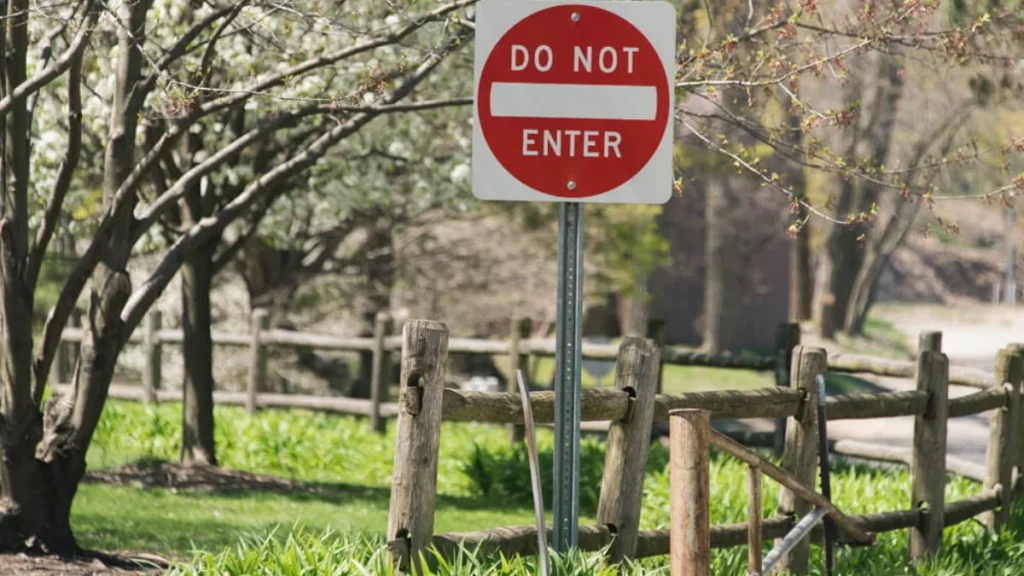
The Do Not Enter sign is one of the most recognizable traffic signs in the United States. Even drivers with little experience can usually identify its distinctive red background and white horizontal bar. However, understanding exactly what this sign means—and why it is used—is essential for both safe driving and passing a driver's license knowledge test.
In the United States, the Do Not Enter sign is classified as a regulatory sign, meaning it communicates a legal requirement rather than a suggestion. When you see this sign, you are prohibited from entering the roadway, lane, ramp, or area beyond it.
Failing to obey a Do Not Enter sign can put you directly into the path of oncoming traffic, creating one of the most dangerous situations that can occur on a roadway.
What Does a Do Not Enter Sign Mean?
A Do Not Enter sign indicates that drivers must not proceed beyond the sign from their current direction of travel.
In practical terms, the sign warns motorists that entering the roadway would place them against the normal flow of traffic. The sign is often used together with other traffic control devices to prevent wrong-way driving and reduce the risk of severe collisions.
The Federal Highway Administration recognizes the Do Not Enter sign as an important safety measure because wrong-way crashes often result in high-speed head-on impacts, which are among the deadliest types of traffic accidents.
When you encounter a Do Not Enter sign, you must not continue forward, even if the roadway appears empty.
How to Recognize the Sign
The Do Not Enter sign is intentionally designed to be easy to identify.
Key characteristics include:
- Red background
- White horizontal rectangle in the center
- White border
- Standardized design used throughout the United States
Because the sign relies heavily on shape and color recognition, drivers can quickly identify it even from a distance or in poor visibility conditions.
Its simple design also helps communicate the message to drivers regardless of language proficiency.
Where Is the Do Not Enter Sign Commonly Used?
The sign can be found in several locations across the United States.
One-Way Streets
One of the most common locations is at the entrance of a one-way street from the wrong direction.
For example, if a street only allows traffic to travel north, drivers approaching from the opposite end may see a Do Not Enter sign to prevent them from entering against traffic.
This use is especially common in downtown areas where one-way street systems help improve traffic flow.
Highway Exit Ramps
Another frequent location is at highway exit ramps.
Drivers should only use exit ramps to leave a freeway or interstate. A Do Not Enter sign helps prevent motorists from accidentally entering the ramp and driving toward vehicles exiting the highway.
Many states also place additional Wrong Way signs farther along the ramp to provide another layer of warning.
Parking Facilities
Parking garages, shopping centers, hospitals, airports, and commercial properties often use Do Not Enter signs to separate entrances and exits.
These signs help maintain an organized traffic pattern and reduce conflicts between vehicles.
Restricted Access Areas
Government facilities, maintenance roads, service entrances, and private properties may use Do Not Enter signs to restrict vehicle access.
In these situations, entering beyond the sign may constitute a traffic violation or trespassing offense, depending on local laws.
What Should You Do When You See a Do Not Enter Sign?
The correct response is straightforward.
Do not drive past the sign.
Instead, drivers should:
- Turn around if it is safe and legal to do so.
- Look for an alternative route.
- Follow directional signs and lane markings.
- Continue only in a permitted direction.
If you realize you are approaching a Do Not Enter sign unexpectedly, avoid making sudden maneuvers. Signal appropriately and move safely to a legal route.
Good driving decisions are based on observation and planning rather than abrupt reactions.
Do Not Enter Sign vs. Wrong Way Sign
Many new drivers confuse the Do Not Enter sign with the Wrong Way sign.
Although the two signs are related, they serve different purposes.
Do Not Enter Sign
The Do Not Enter sign is placed at the point where a driver should not enter.
Its purpose is preventative. It warns motorists before they commit to the wrong direction.
Wrong Way Sign
The Wrong Way sign is generally placed farther inside the restricted roadway.
Its purpose is corrective. It alerts drivers who have already entered incorrectly that they are traveling against traffic.
In many situations, both signs appear together.
For example, a driver attempting to enter a freeway exit ramp may first encounter a Do Not Enter sign. If the driver continues, additional Wrong Way signs may appear farther along the ramp.
Why Is Wrong-Way Driving So Dangerous?
The primary purpose of the Do Not Enter sign is to prevent wrong-way driving.
Wrong-way crashes are particularly dangerous because vehicles are often moving toward one another at high speeds.
Consider a freeway where one vehicle is traveling at 70 mph while another is moving in the opposite direction at a similar speed. The closing speed can exceed 140 mph, dramatically increasing crash severity.
As a result, transportation agencies across the United States place significant emphasis on preventing wrong-way entries through signs, pavement markings, roadway design, and driver education.
Can You Receive a Ticket for Ignoring a Do Not Enter Sign?
Yes.
Traffic laws vary by state, but ignoring a Do Not Enter sign can result in:
- Traffic citations
- Monetary fines
- Driver's license points
- Increased insurance costs
- Mandatory court appearances in some jurisdictions
If the violation leads to a collision, additional penalties may apply.
Because the sign represents a regulatory instruction, failure to comply is treated as a traffic offense rather than a simple driving mistake.
Do Not Enter Sign Questions on Driving Tests
The Do Not Enter sign frequently appears on DMV written exams throughout the United States.
Test questions often ask drivers to identify the sign or explain the correct action when encountering it.
A typical exam question might be:
What does a Do Not Enter sign indicate?
The correct answer is:
You must not enter the roadway, lane, or area beyond the sign from your current direction of travel.
Many test-takers mistakenly select answers related to stopping temporarily or yielding. However, the sign does not mean "stop and proceed when clear." It means entry is prohibited.
Common Driver Mistakes
Several common mistakes occur when drivers misunderstand the sign.
These include:
- Entering a one-way street in the wrong direction.
- Driving onto a freeway exit ramp.
- Ignoring parking lot traffic patterns.
- Following GPS instructions without observing traffic signs.
- Making assumptions based on an empty roadway.
Even if no other vehicles are visible, the restriction remains legally enforceable.
Traffic signs must be obeyed at all times unless directed otherwise by a police officer or authorized traffic control personnel.
Final Thoughts
The Do Not Enter sign is one of the most important regulatory signs used on American roads. Its message is simple: drivers are prohibited from entering beyond the sign from their current direction.
Whether it appears at a one-way street, a freeway exit ramp, a parking facility, or a restricted access area, the sign serves a critical safety function. By preventing wrong-way driving, it helps reduce severe collisions and keeps traffic moving safely and predictably.
For anyone preparing for a DMV permit test or seeking to become a safer driver, understanding the Do Not Enter sign is essential. Recognizing the sign instantly and responding correctly can help prevent dangerous situations and ensure compliance with U.S. traffic laws.

Functional Always active
Preferences
Statistics
Marketing
Leave a Reply