Common DMV Signs Test Mistakes

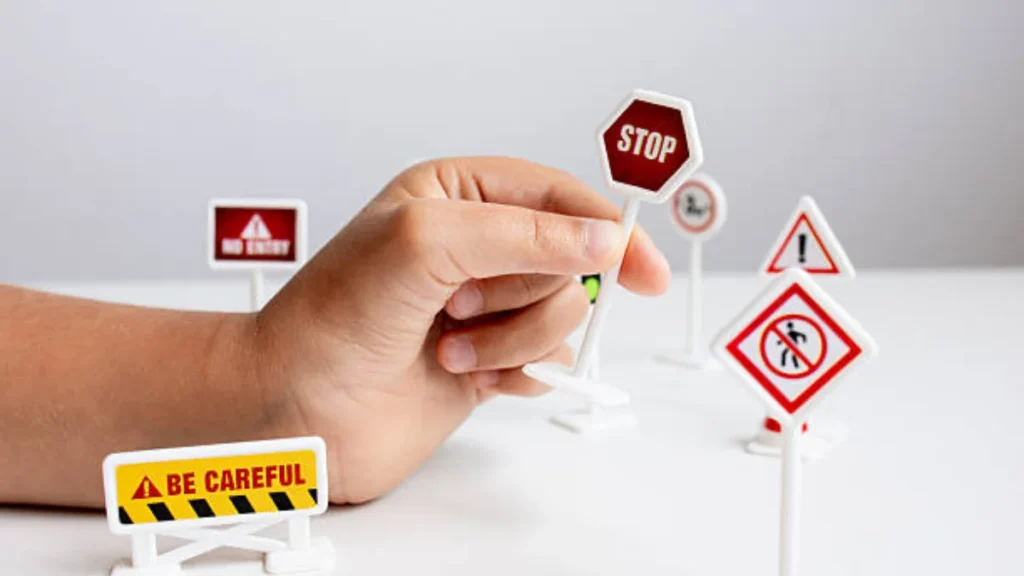
Road signs are one of the most important parts of the DMV written test, but they are also where many applicants lose easy points. Even students who study hard often make avoidable mistakes because they misunderstand sign meanings, confuse similar symbols, or rely too much on memorization.
Understanding the most common DMV signs test mistakes can help you avoid them and significantly improve your chances of passing the exam on your first attempt.
This guide explains the most frequent errors learners make and how to correct your study approach for better results.
Why DMV Sign Questions Are Tricky
DMV sign questions are not designed to be difficult, but they often test your ability to recognize details quickly. Small differences in shape, color, or wording can completely change the meaning of a sign.
Many mistakes happen because learners:
- Memorize instead of understanding
- Do not study visual patterns
- Rush through questions
- Ignore similar-looking signs
To succeed, you must focus on recognition, not just memory.
Mistake 1: Confusing Similar Road Signs
One of the most common errors is mixing up signs that look similar but have different meanings.
Examples include:
- Stop sign vs. all-way stop variation signs
- Yield sign vs. warning signs
- One-way vs. do-not-enter signs
- Different speed-related signs
These signs often share colors or shapes, but the details are what matter.
To avoid this mistake, study signs side by side instead of individually.
Mistake 2: Ignoring Color and Shape Meanings
Many learners focus only on the symbol inside the sign and ignore color and shape, which are just as important.
For example:
- Red usually means stop or prohibition
- Yellow means warning or caution
- Green means directions or guidance
- Orange means construction zones
- Blue means services or information
Shapes also provide clues:
- Octagon = stop
- Triangle = yield
- Diamond = warning
- Rectangle = informational
Ignoring these patterns leads to confusion on test day.
Mistake 3: Memorizing Without Understanding
A major reason for failure is trying to memorize sign answers instead of understanding their purpose.
For example, instead of memorizing “this sign means curve ahead,” it is better to understand that:
- Warning signs prepare drivers for changes in road conditions
- Regulatory signs enforce legal rules
- Guide signs help navigation
Understanding the logic behind signs makes it easier to answer unfamiliar questions.
Mistake 4: Not Practicing Visual Recognition
Some learners only read about road signs but do not practice identifying them visually.
This creates problems because the DMV test shows images, not descriptions.
To avoid this mistake:
- Use visual practice tests
- Study sign images regularly
- Test yourself without looking at answers
Visual familiarity is essential for fast recognition.
Mistake 5: Rushing Through Test Questions
Another common mistake is rushing through the DMV signs section of the test.
Because signs look simple, many applicants answer too quickly and miss important details.
To avoid this:
- Read each question carefully
- Look for small differences in wording
- Double-check similar answers
Speed is not as important as accuracy.
Mistake 6: Ignoring Construction Zone Signs
Construction zone signs are often overlooked but frequently appear on DMV exams.
Common signs include:
- Road work ahead
- Lane closure warnings
- Detour signs
- Flagger ahead
These signs are usually orange and indicate temporary hazards. Ignoring them in study sessions is a common error.
Mistake 7: Not Reviewing Mistakes in Practice Tests
Many learners take practice tests but do not review their wrong answers.
This is a major missed opportunity because mistakes show exactly what you need to improve.
To fix this:
- Review every incorrect answer
- Understand why it was wrong
- Re-study that specific sign category
This improves memory and reduces repeated errors.
Mistake 8: Overconfidence in Easy Signs
Some signs seem obvious, which leads learners to underestimate their importance.
However, even simple signs like stop, yield, and speed limit can appear in tricky question formats.
Always read carefully, even if the answer seems obvious.
How to Avoid These Mistakes
To improve your performance on DMV sign questions, follow these strategies:
- Study signs by category
- Learn color and shape meanings
- Practice visual recognition daily
- Review mistakes carefully
- Focus on understanding, not memorization
Consistency is more effective than last-minute studying.
Final Thoughts
Most DMV signs test mistakes are not caused by lack of intelligence, but by poor study methods. Confusing similar signs, ignoring visual patterns, and rushing through questions are the most common reasons for losing points.
By learning how road signs are structured and practicing regularly with visual materials, you can avoid these mistakes and significantly improve your chances of passing the DMV written test.
Mastering road signs is not just about passing the exam. It also builds the foundation for safer and more confident driving in real traffic situations.
Functional Always active
Preferences
Statistics
Marketing
Leave a Reply